Why Stains Come Back After Cleaning — And How to Stop It
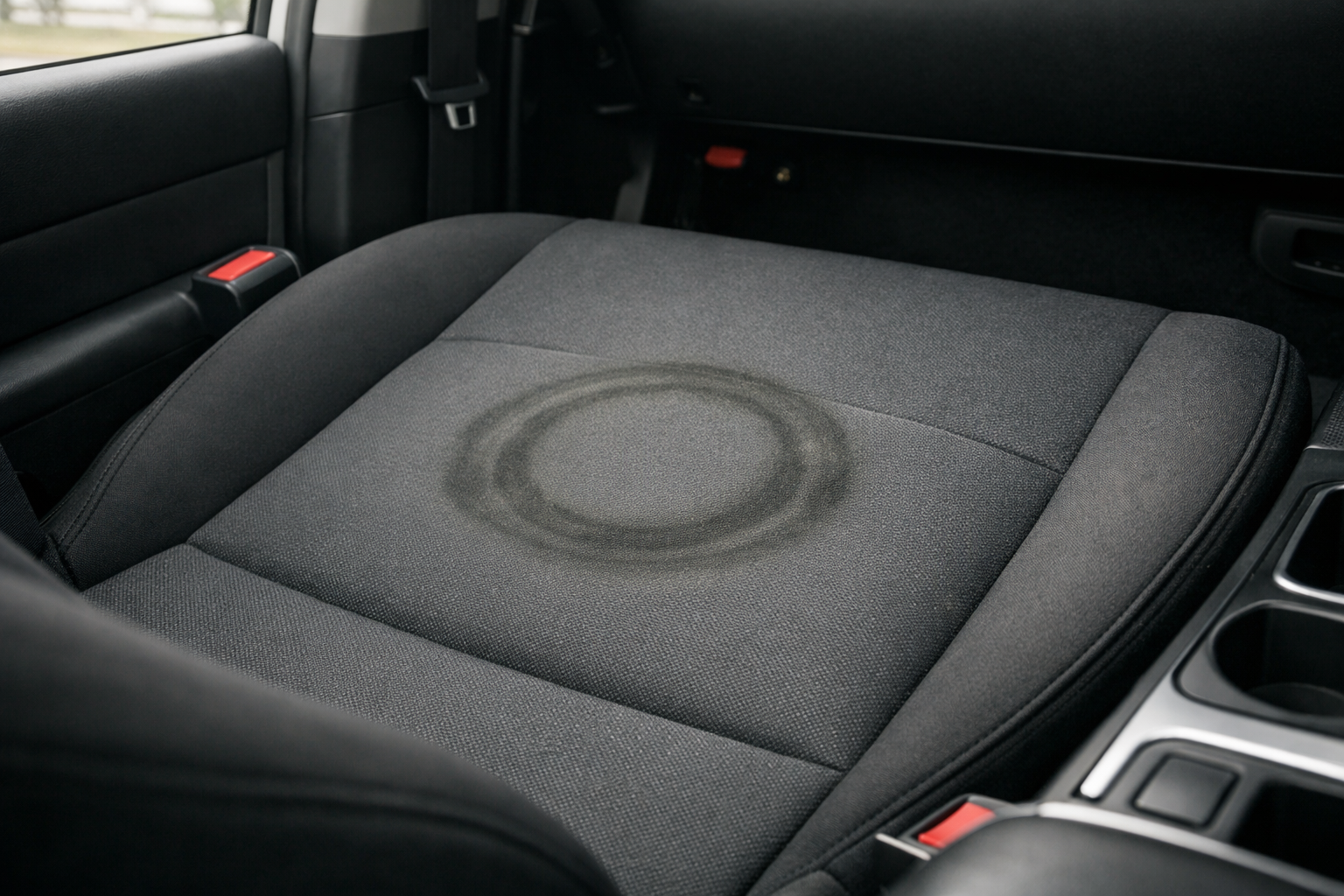
Table of Contents
What Is Wicking in Car Interior Seats?
Wicking is when a stain that appeared clean and dry re-emerges on the surface of the fabric after it dries. Here's what happens:
When you clean a seat, you wet the fabric and the foam/padding beneath it. Dirt, oils, and cleaning chemicals get pushed deeper into the padding during the cleaning process. As the seat dries, moisture travels back upward through the fabric fibers (like a wick on a candle), dragging dissolved contaminants back to the surface — leaving a new stain or a ring mark that wasn't there when you finished.
It's especially common with:
- Coffee, soda, and food spills that soaked deep before being treated
- Over-wetting during extraction
- Old set-in stains where residue has bonded to the padding
How to Neutralize Cleaning Chemicals
The right neutralizer depends on what you used:
Alkaline cleaners (most APC degreasers, upholstery cleaners) — Neutralize with a diluted acidic rinse. A small amount of white vinegar in water works well, or use a dedicated fabric neutralizer. This also helps prevent browning on natural fibers.
Acidic cleaners (some stain removers, enzyme treatments) — Neutralize with a mild alkaline rinse. A very diluted APC solution or plain water extraction is usually sufficient.
General Best Practices After Cleaning
- After cleaning, do a thorough hot water extraction pass with no chemical — this rinses and dilutes residue significantly
- Use an IPA (isopropyl alcohol) wipe-down on the surface after drying to lift any remaining residue
- A dedicated fabric rinse/neutralizer leaves the pH balanced and helps fibers relax back into place
How to Prevent Wicking
Extract as much moisture as possible during cleaning, use fans or a heat gun on low to speed drying, and avoid over-saturating the seat in the first place. The faster it dries, the less chance contaminants have to travel back up.